Cape Cod homes are a little different than “typical” suburban builds. You’ll see older capes with chopped-up rooms, finished basements, sunrooms/additions, tight knee-walls, and (often) no ductwork at all. That’s why “the best heat pump” isn’t one brand or one model — it’s the right system layout for how your home is built and how you live in it.
This guide breaks down the three most common options — ductless mini-splits, ducted mini-splits, and central (ducted) heat pumps — and when each one wins for Cape Cod comfort, efficiency, and cost.
Quick definitions (so we’re talking about the same thing)
1) Ductless mini-split (most common on the Cape)
-
Outdoor unit + one or more indoor heads mounted on a wall/ceiling
-
No ductwork; each head conditions its “zone”
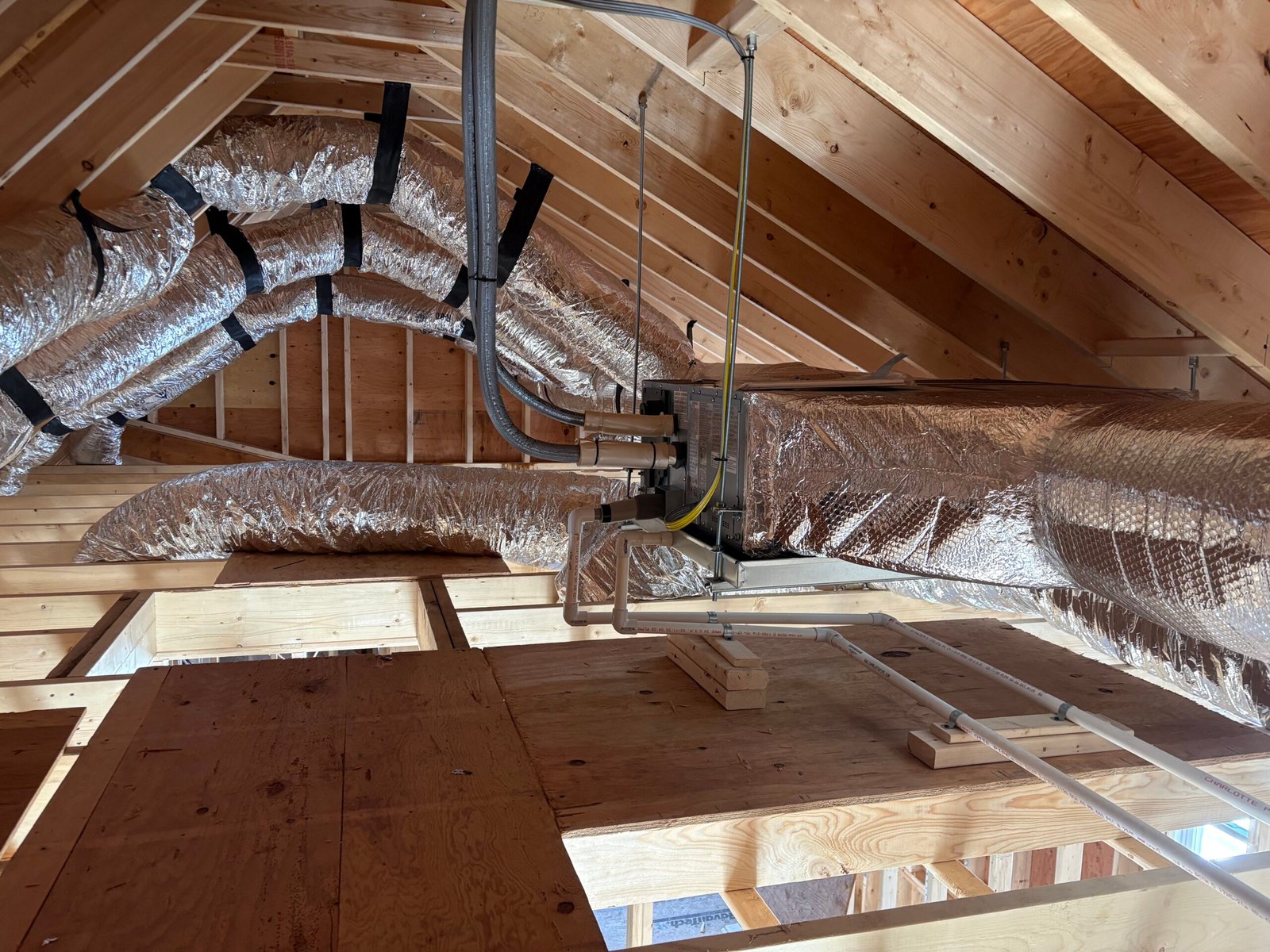
2) Ducted mini-split (a “heat pump with small ducts”)
-
Outdoor unit + concealed indoor air handler
-
Uses short duct runs (often in attic, basement, or soffits) to feed several rooms
3) Central heat pump (traditional ducted system)
-
Outdoor unit + indoor air handler connected to full-size ductwork
-
Typically one thermostat zone unless duct zoning is added
When each option wins (Cape Cod edition)
Ductless wins when…
✅ You don’t have ducts (or they’re in bad shape)
A lot of Cape Cod homes simply weren’t built with central ducts. Ductless is often the cleanest path to heat + A/C without opening walls everywhere.
✅ Your home has distinct rooms or comfort “hot spots”
Bedrooms upstairs, a finished basement, a sunroom, or that one room that’s always too cold/too hot — ductless lets you target problem areas and zone the home naturally.
✅ You’re adding an addition or finishing a space
Additions are perfect for ductless because you can condition the new area without reworking the whole home.
✅ You want room-by-room control
Each head can run independently. Great if you like a cool sleeping room and warmer living areas.
Cape Cod pro tip: Ductless is ideal for classic capes with knee-walls and limited chase space. It also avoids long duct runs through unconditioned attic spaces (a common efficiency problem if ducts aren’t sealed/insulated well).
Potential downsides (so you’re not surprised):
-
You’ll see indoor heads (some homeowners dislike the look)
-
Multiple heads = more filters to maintain
-
Door-closed bedrooms can be tricky if there isn’t a head or a well-planned transfer path
Ducted mini-split wins when…
✅ You want the “hidden” look
If you don’t want wall heads, a concealed ducted air handler can feed multiple rooms with subtle ceiling/wall registers.
✅ You need to serve multiple bedrooms
This is a big one. Many Cape homes have several small bedrooms upstairs. A ducted mini-split can supply each bedroom from one compact system — often cleaner than putting a head in every room.
✅ You have a good place for short ducts
Attic, basement, or built soffits can work well. The keyword is short: ducted mini-splits are happiest with compact duct layouts.
✅ You want better air mixing than single-room heads
Ducted distribution helps even out temperatures and avoids the “one zone is perfect, the other is not” feeling.
Cape Cod pro tip: Ducted mini-splits can be a sweet spot for homes where the first floor is open (good for ductless zoning) but the second floor is bedroom-heavy (better served by a ducted air handler).
Potential downsides:
-
Needs duct design (and good install quality)
-
Still not ideal for long, sprawling duct systems
-
Can cost more than a simple 1–2 head ductless setup
Central (ducted) heat pump wins when…
✅ You already have ductwork in good condition
If you have existing ducts (often from older forced-air systems) and they’re sized and sealed well, a central heat pump can be a straightforward upgrade.
✅ You want “one system, one thermostat” simplicity
Some homeowners prefer one consistent whole-home approach rather than multiple zones/heads.
✅ You have a more open layout
Central systems do well when the home layout doesn’t isolate many small rooms.
✅ You care about filtration and IAQ add-ons
Central ducted systems can be great for whole-home filtration, UV options, humidification/dehumidification strategies (where appropriate), and fresh air integration.
Cape Cod pro tip: Central can work well in newer builds on the Cape or homes that have already been renovated with ductwork in mind.
Potential downsides:
-
If ducts run through attic/crawl spaces, sealing + insulation matters a lot
-
One thermostat doesn’t equal perfect room-by-room comfort
-
Poor duct design can make a good heat pump feel “meh”
Common Cape Cod layouts and what usually works best
1) Classic Cape: small rooms + upstairs bedrooms
Best fit:
-
Hybrid approach is common: ductless downstairs + ducted mini-split upstairs
Why: -
Living spaces benefit from zoning; bedrooms benefit from distributed supply without multiple heads.
2) Ranch: open living area + simple bedroom wing
Best fit:
-
Central if ducts exist and are good
-
Ductless if no ducts, especially with an open living area plus targeted bedroom solution
Why: -
Easy duct paths; simple airflow patterns.
3) Split-level with finished basement
Best fit:
-
Ductless or multi-zone with a dedicated basement zone
Why: -
Basements vary by use; zoning avoids conditioning it when you don’t need it.
4) Addition/sunroom that’s always uncomfortable
Best fit:
-
Dedicated ductless (often the cleanest solution)
Why: -
Additions often underperform; a dedicated system is controllable and efficient.
Sizing rules-of-thumb (and why “bigger isn’t better”)
If you’ve ever heard “just put in a bigger unit,” that advice is outdated — and it can make comfort worse.
The old rule-of-thumb (and why it’s risky)
You’ll often see quick estimates like:
-
20–30 BTU per sq ft (very rough)
For a 1,500 sq ft home, that suggests 30,000–45,000 BTU/h.
The problem: Cape Cod homes vary massively in insulation, air sealing, window quality, and layout. A drafty older cape and a renovated cape can have completely different heating loads.
Better rule-of-thumb: start with the load, not the square footage
A proper design uses a room-by-room load calculation (often called Manual J). Even without going deep into formulas, here’s what changes sizing the most on Cape Cod:
-
Insulation and air sealing (knee walls are huge)
-
Window area and condition (older sliders vs newer units)
-
Open vs chopped-up floor plans
-
Attic and basement conditions
-
Orientation and wind exposure (coastal effects)
Why oversizing hurts (especially with heat pumps)
A heat pump that’s too large tends to:
-
Short-cycle (turn on/off too often)
-
Deliver less consistent comfort
-
Remove less humidity in cooling season (short run times)
-
Create temperature swings and “drafty” airflow
-
Cost more upfront
In other words: Bigger can be noisier, less comfortable, and not actually cheaper to run.
A practical sizing framework homeowners can understand
Think of sizing like this:
-
Open living area (downstairs): Often 1 head or 1 zone can cover a lot if air can circulate
-
Closed bedrooms: Usually need their own supply strategy (head in each, or ducted distribution)
-
Additions: Treat as their own zone unless they’re truly open to the main space
-
Second floors: Often need dedicated capacity (hot rises, but cooling and winter comfort are more complex)
If a contractor proposes a size without asking about insulation, windows, or doing any measurement-based load work, that’s a red flag.
The “best” choice is usually about layout + goals
Here’s the simplest way to decide:
Choose ductless if:
-
You lack ducts
-
You want zoning and targeted comfort
-
You have additions or problem rooms
Choose ducted mini-split if:
-
You want a cleaner look
-
You need to serve multiple bedrooms
-
You can keep ducts short and well-planned
Choose central if:
-
You already have good ducts
-
You want one-system simplicity
-
You want whole-home air distribution and add-on IAQ options


Leave a Reply